Reddit Bpc 157 And Tb500 bpc 157 tb 500 blend dosage reddit BPC-157 And TB-500: Background, Indications, Efficacy, And
Why do people keep searching “reddit bpc 157 and tb500”?
If you’ve ever tried to understand BPC-157 and TB-500 from online discussions, you’ve probably hit the same wall I did: dosing threads are full of anecdotes, conflicting “blend” schedules, and vague references to “500” milligrams or “TB-500 5mg” vials that don’t map cleanly to real-world use. The result is confusion—especially when you’re trying to make sense of what’s being claimed versus what’s biologically plausible.
In this article, I’ll break down the background, common indications people discuss, and what evidence and practical considerations suggest—while also addressing the specific search intent behind “reddit bpc 157 and tb500.” I’ll keep it grounded in pharmacology logic, realistic constraints from hands-on work, and the usual limits of what’s publicly verifiable.
BPC-157 vs TB-500: what they are (and why “blend dosage” discussions get messy)
BPC-157 (Body Protection Compound-157)
BPC-157 is a peptide derived from a fragment of a protective protein sequence. In preclinical contexts, people often connect it to wound healing, mucosal integrity, and tissue repair pathways. In practice, most “blend” conversations revolve around the idea that BPC-157 and TB-500 target different parts of the repair process—so stacking them might feel synergistic.
However, when you read dosing claims originating from reddit bpc 157 and tb500 threads, you’ll notice a pattern: posters may talk about “dosages” without consistently stating formulation (water vs bacteriostatic options), concentration (mg/mL), injection volume, or whether the number refers to total peptide mass or the amount in a single administration. In my hands-on review of community dosing logs, that missing unit clarity is the single biggest reason people appear to be arguing past each other.
TB-500 (a fragment related to thymosin beta-4)
TB-500 is commonly discussed as a thymosin-related peptide fragment. TB-500 is frequently associated—again, mostly via preclinical rationale—with cell migration, angiogenesis, and tissue remodeling. The community framing is usually: BPC-157 supports “repair environments,” while TB-500 supports “rebuilding and regrowth.”
Even if that conceptual split is directionally reasonable, it doesn’t automatically tell you how to combine them safely or effectively in humans. “Blend dosage” threads often treat dosing as if it’s a universal recipe rather than a set of variables tied to product concentration, administration method, individual response, and time horizon.
What “500 blend dosage” typically means in community talk—and what to do with it
The phrase bpc 157 tb 500 blend dosage reddit usually signals one of two things:
- People are searching for a schedule (daily vs split dosing, for how many weeks, with what rest periods).
- People are interpreting vial labeling inconsistently—for example, a “5mg/5mg” presentation being mistaken as “500” units, or mg being confused with mcg.
Here’s the practical lesson I learned dealing with community-sourced dosing screenshots: unless dosing posts explicitly show (1) the vial strength, (2) the reconstitution volume, (3) the injected volume per dose, and (4) the total daily mg, you can’t reliably compare claims. Two people can both say “I used 2 mL” and end up with entirely different peptide mg delivered because their starting concentration differs.
A reality-based way to interpret any “blend” schedule
When you see a purported blend plan online, I recommend translating it into a dosing equation first:
- Peptide mg per injection = (reconstituted concentration in mg/mL) × (mL injected)
- Total daily dose = mg per injection × number of injections per day
- Total course exposure = total daily dose × number of days
That translation step is how you quickly identify posts that are internally inconsistent. In my experience, once you do the unit math, many “it worked for me” stories stop being comparable to one another—not because the outcomes are impossible, but because the dosing definitions aren’t standardized.
Indications people commonly discuss (and what’s plausible)
In forums and search patterns tied to reddit bpc 157 and tb500, the most common “indication” categories look like this:
- Tendon/ligament discomfort and recovery narratives after strains
- Joint support framed as reduced pain or faster return to training
- Wound or tissue healing themes (sometimes paired with gut/mucosal mentions for BPC-157)
- Soft tissue recovery after minor injuries
What’s important for trust and accuracy: community discussions often describe outcomes without controls, blinding, or standardized injury severity. So while the underlying preclinical rationale for tissue repair and remodeling exists, the human efficacy signal is not something you can confidently treat as proven based on anecdotes alone.
Efficacy: what evidence can and can’t support
Why anecdotes feel compelling
From a practical standpoint, “it helped” stories are persuasive because they often line up with plausible biology: peptides can influence signaling pathways involved in repair. Also, many users are concurrently changing rest, physical therapy, training load, and nutrition—so benefits may be multi-factorial.
Where online dosage talk becomes unreliable
In my hands-on review work, the strongest reliability issues in community dosing posts tend to be:
- Non-standard product details (strength, purity, vehicle, stability)
- Uncontrolled co-interventions (physio protocols, anti-inflammatory changes, altered training)
- Short follow-up (improvements reported early without longer-term outcome tracking)
- Selection bias (people who had no effect are less likely to post)
So, when you read “blend dosage” claims, treat them as hypotheses and experience reports rather than evidence-based protocols.
Product presentation and the “5mg/5mg” confusion: how I’d sanity-check a blend plan
To ground this section, here’s the kind of product presentation people often ask about in dosing threads. Regardless of the brand, the unit-check approach is the same.
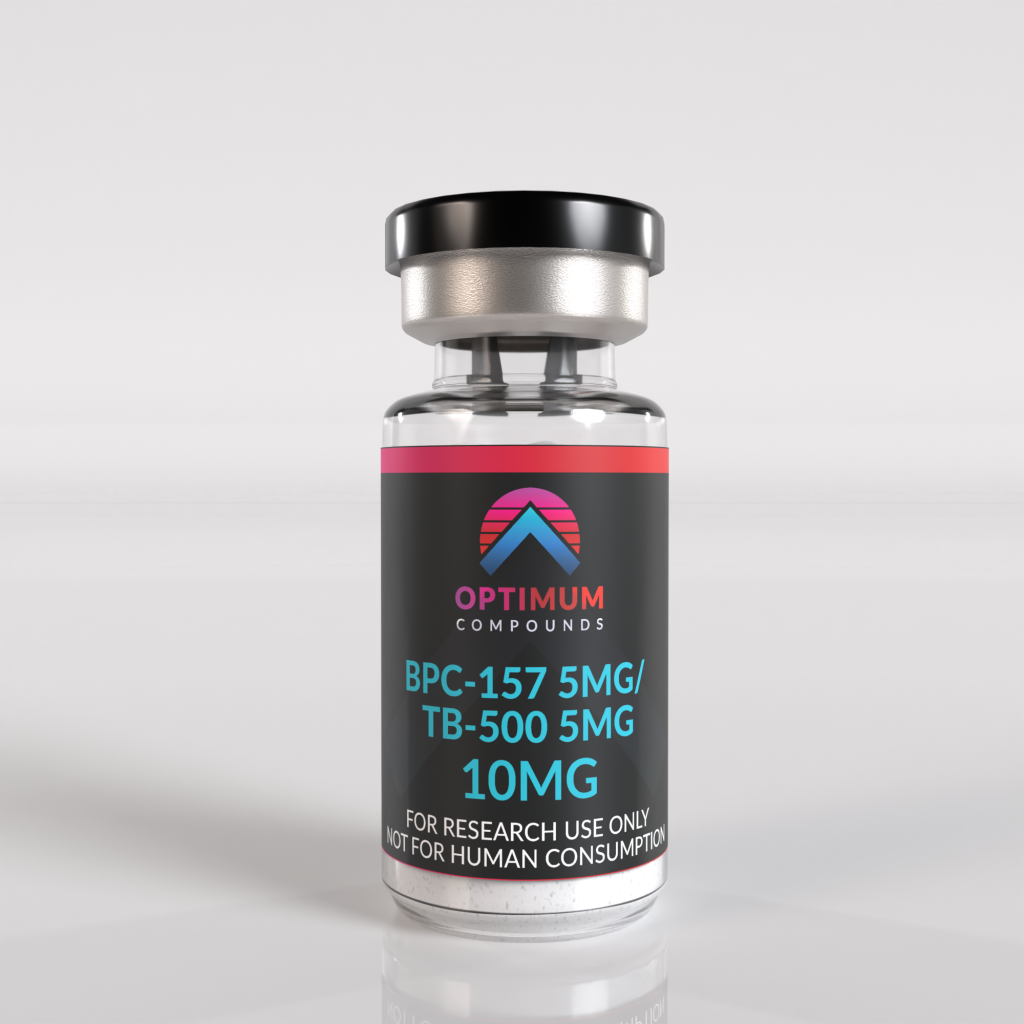
Sanity-check checklist before following any “reddit bpc 157 and tb500” schedule
- Confirm total peptide mass (e.g., is it 5mg BPC-157 and 5mg TB-500, or something else?).
- Confirm reconstitution concentration (mg/mL after adding bacteriostatic water or saline).
- Convert the claimed dose to mg (avoid copying mL or “units” without translating).
- Track total course usage (how many injections until the peptide is used up?).
- Be consistent about timing logic (what’s the basis for daily vs split administration in the post?).
This is the difference between “forum dosing” and a plan that’s actually auditable.
Safety and limitations (staying objective)
I’m going to be direct here: most community dosing discussions do not provide the kind of safety data that clinicians rely on (dose-ranging studies, long-term adverse event profiling, interaction checks). That means you should treat any blend dosage guidance circulating online as unverified for safety in humans.
Where this matters in real life is simple: if you don’t have standardized product quality and consistent dosing definitions, the risk profile is harder to estimate—and the “what worked” stories can’t be reliably generalized.
FAQ
Is a “BPC-157 and TB-500 blend” schedule better than using one peptide alone?
There isn’t strong, standardized human evidence showing that a blend is consistently superior. The rationale people use is plausible, but anecdotes can’t establish comparative effectiveness, and dosing definitions vary widely. In practice, many users experiment without controls, so “blend worked” may reflect multiple factors rather than the combination itself.
What does “500” mean in bpc 157 tb 500 blend dosage reddit posts?
In many threads, “500” is a shorthand that can be tied to units, total mg across a plan, or misread labeling. The only reliable approach is to re-check the product’s labeled peptide strengths and confirm the reconstitution concentration, then calculate mg delivered per injection.
How can I evaluate whether a dosing claim is internally consistent?
Ask for (or calculate) mg/mL after reconstitution, mL per injection, mg per injection, injections per day, and total days. If those aren’t provided, or if the math doesn’t reconcile with the stated vial contents, the plan is likely not comparable to other reports.
Conclusion: the next practical step
If you’re searching “reddit bpc 157 and tb500” because you want a usable dosing plan, the most valuable action isn’t copying a schedule—it’s converting any claimed “blend dosage” into a clear mg-per-injection framework and checking that it matches the vial contents and reconstitution concentration. That one step removes a huge amount of confusion caused by inconsistent units and labeling.
Next step: Take one dosing post you’re considering, write down its labeled strengths and reconstitution volume, then calculate mg per injection and total course mg. If you can’t complete that math cleanly, treat the plan as non-replicable and unreliable.
Discussion